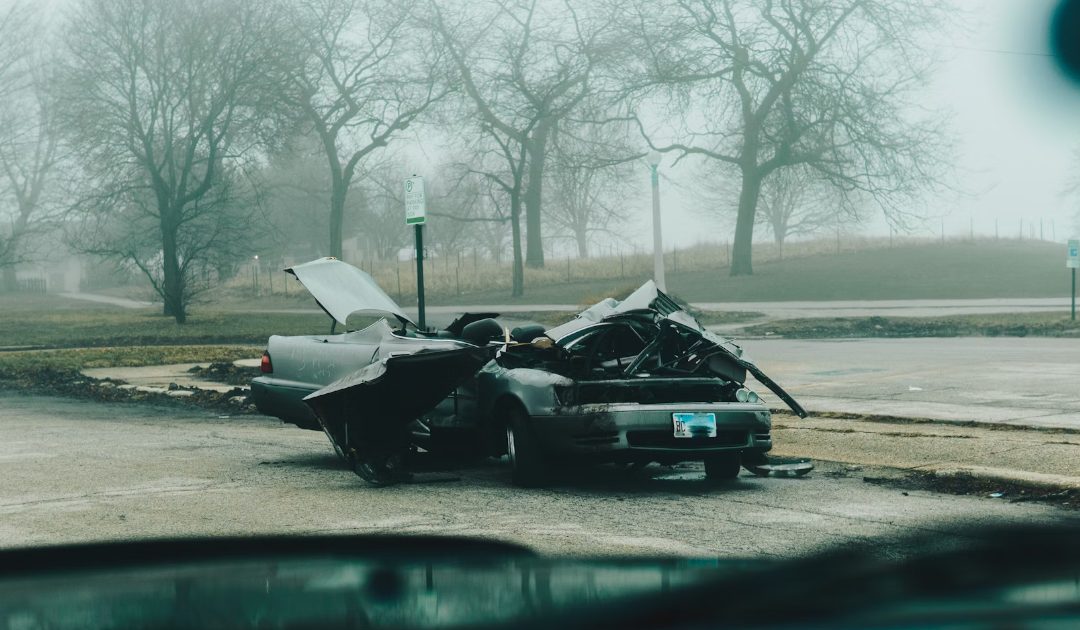
I went to take my car for a roadworthy inspection because I needed it cleared for commercial use. It was supposed to be routine—just another requirement, a simple task on my list of responsibilities. But that day, something happened that shook me deeply and made me think not just about my car, but about life, integrity, and the consequences of our choices.
I failed the test.
I failed the test because a man—an honest, principled man—told me the truth about my car. It was a truth I didn’t know. And a truth, I realized, that could have put my family—and others on the road—in danger.
As I waited while the inspectors examined my vehicle, a young man who worked in the same company approached me. He leaned in and said something that stayed with me:
“This white man is too strict. He’s going to come back and fail your car. But if he does, don’t worry. Come back Monday and I will sort you out.”
At first, I didn’t respond. I just listened. And then I thought: How many times do we encounter these small moments in life where truth and integrity collide with convenience and corruption? How many times do we have a choice to take the easy path, or the hard path, knowing that the consequences may extend far beyond ourselves?
This story made me think of the road accidents that plague our country. I thought about the many cars on the road, some of them unsafe, some of them driven by people who may never know—or care—about the dangers they pose. And I thought about the young man’s words. He was offering me a shortcut, a way to bypass accountability. But in doing so, he was also exposing the tragic reality: corruption isn’t harmless. It kills.
In South Africa, the road safety crisis is undeniable. In 2023, there were 10,180 fatal crashes leading to 11,883 deaths—a staggering number that underscores the urgency of the situation. Pedestrians, often the most vulnerable road users, accounted for 45.1% of all fatalities. These statistics are not just numbers; they represent lives lost, families shattered, and communities devastated.
We live in a society where cutting corners has become normalized. Whether it’s in healthcare, education, government services, or even something as mundane as a roadworthy test, there are countless ways in which people are tempted to ignore rules, fudge standards, or “find a way” around what is required. And we often rationalize it: “It’s just a little thing. Nobody will get hurt.”
But truth has a way of exposing itself, and consequences have a way of catching up. The truth about my car—that it was unsafe—was uncomfortable, inconvenient, and costly. Fixing it costs money I hadn’t budgeted for. But looking back, every rand spent is worth it. If I had allowed myself to be complicit, if I had chosen the easy route, the consequences could have been deadly. One day, that car could have failed in a critical moment, and lives could have been lost.
This story isn’t just about cars. It’s about life. It’s about the way we live and the choices we make, particularly when it comes to honesty and integrity. When we take shortcuts or ignore what is right, we are not just cheating a system—we are endangering real people. We are participating in a culture where accountability is optional and lives are treated as expendable.
I am reminded of the words of the apostle Paul in Galatians 6:7: “Do not be deceived: God cannot be mocked. A man reaps what he sows.” In other words, our actions have consequences. When we choose corruption, deceit, or dishonesty, the harvest may not be immediate—but it will come. And often, it is the innocent who pay the price.
Consider the broader implications. In hospitals, a doctor might be tempted to cut corners with patient care, to take the easier, faster, or more profitable route. In schools, educators might neglect standards for the sake of convenience. In government offices, laws might be ignored or bypassed because “it won’t matter this time.” In every instance, there is a human cost. Someone, somewhere, may be injured or killed because someone else chose convenience over truth.
In my case, the roadworthy inspector—the man who told me the truth—embodied a different path. He represented diligence, responsibility, and integrity. He held me accountable not for punishment’s sake, but because the truth mattered. Because lives mattered. And that is what changed everything. I failed the test. But in failing, I learned a lesson that no shortcut could have taught me.
I also reflected on the young man who offered the easy way out. He meant well in his own way—he probably thought he was helping me. But good intentions are not enough when they ignore truth. The desire to “fix” things outside the system, to make life easier at the expense of integrity, can have devastating consequences. It is not enough to survive; we must live rightly, guided by truth, responsibility, and a deep awareness of the impact of our actions.
So, what can we take from this story? Here are a few reflections:
- Truth protects life. The roadworthy inspector was strict, yes—but his strictness preserved life. Obedience to truth may be inconvenient, uncomfortable, and costly in the short term, but it ultimately saves lives.
- Corruption kills. Even small compromises—offering to “sort out” a failed car, fudging paperwork, ignoring safety protocols—can have catastrophic consequences. The temptation to bypass standards is real, but the stakes are high.
- Integrity is relational. The young man who offered the shortcut is part of a system that enables shortcuts. But the choice to honor truth or bypass it is personal. We cannot outsource our moral responsibility to someone else.
- We are accountable. In God’s eyes, and often in society’s, our choices matter. To fail to act rightly is not neutral; it is participation in the harm that may follow.
- Courage matters. It takes courage to hear the truth, accept it, and act on it. It takes courage to confront systems of corruption, even in small ways. But courage rooted in truth is life-giving.
When I walked away from that roadworthy test, I was not embarrassed or ashamed. I was grateful. Grateful that the truth was revealed, grateful that my eyes were opened, and grateful that I had the opportunity to act rightly. My car was fixed, my family was safe, and I carried a renewed awareness that integrity matters.
As believers, as citizens, as human beings, we are called to live with the same awareness. Every choice, every shortcut, every act of dishonesty has consequences. Whether we are in a car inspection centre, a hospital, a classroom, or an office, the truth matters. Lives matter. And God sees.
So the next time we are tempted to cut corners, to bypass the rules, or to ignore what is right because it is inconvenient, let us remember my car, the roadworthy inspector, and the young man. Let us remember the stakes. And let us choose the path that honors truth, protects life, and glorifies God in every sphere of our lives.
Because in the end, life is too precious, and truth is too important, to settle for anything less.
Siyabulela Zalabe
Pastor
A Reformed Baptist pastor devoted to sharing Christ-centered sermons, articles, books, and speaking engagements that unite sound doctrine with faithful Christian living.
Pastor Siyabulela is married to Naledi, and they are grateful parents to two daughters and a son. He serves as Senior Pastor of Cambridge Baptist Church in East London, Eastern Cape, South Africa.