
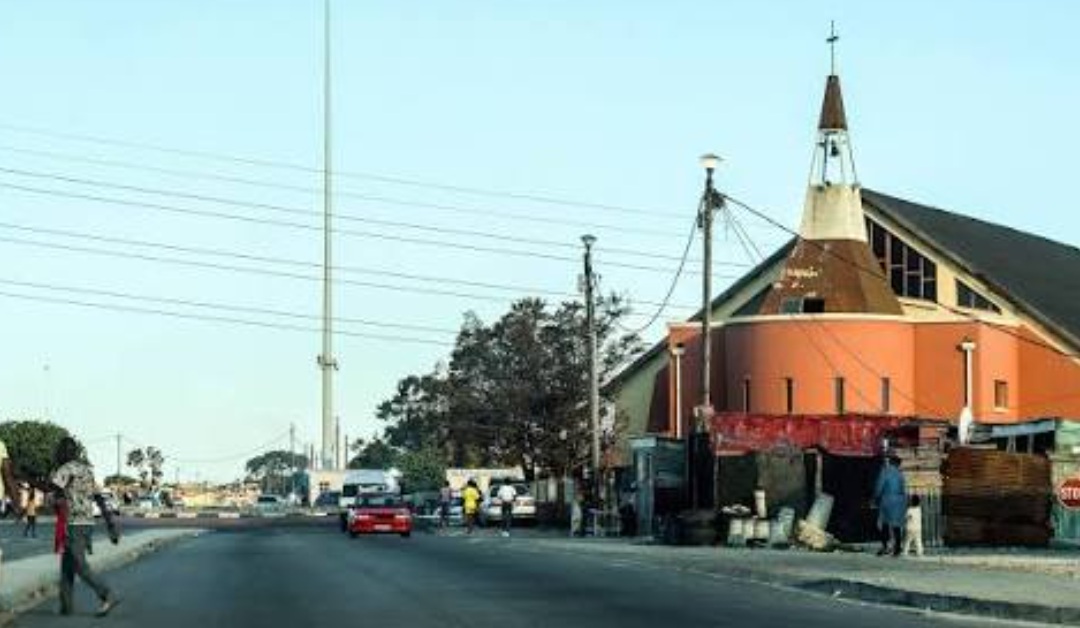
After writing about the idea of a robustly South African church, I began thinking about a pastor serving in one of our townships in the Eastern Cape. Perhaps he reads the article and looks at his congregation. Almost everyone is Xhosa-speaking. Most people in the community are Xhosa-speaking too. He may ask, But what am I supposed to do with this? Perhaps this idea works in Soweto. In a place like Johannesburg, you may find Xhosa, Zulu, Sotho, Tswana, Venda, Tsonga, Pedi, and other people living in the same community. A local church there may naturally become ethnically diverse as it reaches its neighbours.
But what about a church in Mdantsane, Kwa-Zakhele, or another township in the Eastern Cape? What if almost everyone around you is Xhosa? Can such a church really become a robustly South African church? I think that is a fair question. And perhaps we should not answer it too quickly.
What Do We Mean by Diversity?
Maybe we should begin by asking another question: When we speak about diversity, what exactly do we mean? It is easy in South Africa to think first about race. Our history has trained us to notice racial differences. We may walk into a church and immediately notice whether the congregation is black, white, coloured, or mixed. But are those the only differences that matter?
Imagine walking through a township street on a Saturday afternoon. An elderly woman is sitting outside her home. She grew up in a rural village and moved to the township many years ago. Christianity has been part of her world for most of her life. A few houses away, a young man is sitting with his phone. He was born in the township. He spends hours online. He listens to people from Johannesburg, Lagos, London, and America. He may speak isiXhosa at home, but many of the ideas shaping the way he thinks come from a world his grandmother hardly knows.
They are both Xhosa. They may live on the same street. But are they culturally exactly the same? Probably not. Perhaps this is where we need to think more carefully about what we mean when we say that a church is reaching its community.
We Are More Than Our Ethnic Group
There is real value in our ethnic and cultural identities. We should not pretend those differences do not exist. But none of us can be fully explained by one word. A person may be Xhosa, but he is also young or old, rural or urban, wealthy or poor, educated or uneducated, employed or unemployed. He may have grown up in church or may know almost nothing about Christianity. One person may have been shaped by traditional beliefs. Another may have grown up in a mainline church. Another has listened to prosperity preaching for years. Another considers himself Christian simply because his family is Christian. Another has become suspicious of Christianity altogether.
All five may speak isiXhosa. And, of course, this is not only true of Xhosa-speaking communities. A pastor serving in a predominantly Afrikaans community might look around and think, Everyone here is Afrikaans. A pastor in a mostly English-speaking suburb might think the same. But are all Afrikaans-speaking people the same? Are all English-speaking South Africans the same? Within those communities we will also find different generations, economic circumstances, levels of education, church backgrounds, beliefs, and subcultures. The question is not only whether we are crossing ethnic boundaries. It is whether we are faithfully reaching the different kinds of people God has placed around us. So perhaps the question for the township pastor is not simply, How can I get other ethnic groups into my church? Maybe there is another question to ask: Am I reaching the different kinds of Xhosa-speaking people whom God has already placed around me? That question may take us somewhere important.
Could We Be Reaching Only One Kind of Xhosa Person?
Consider a church where nearly everyone is Xhosa-speaking. At first glance, it may seem that everyone comes from the same culture. But spend some time there and you may discover something else. Perhaps most members are older women. Where are the young men? Perhaps most members already know church culture. What about the person who has never learned how church works? Perhaps most members have similar levels of education. Would someone with very little education feel equally at home? Would a university lecturer? Perhaps everyone comes from the same network of families and friendships.
What happens when someone walks in who knows nobody? This is where the idea of a robustly South African church begins to challenge all of us. A church can be ethnically diverse and still be closed to outsiders. And a church can be almost entirely Xhosa-speaking while crossing significant cultural and social boundaries for the sake of the gospel.
Think of a family table. Everyone sitting around that table may share the same surname. They may speak the same language. Yet the grandfather, the teenage granddaughter, the uncle who works in another province, and the cousin studying at university do not experience the world in exactly the same way. They are one family, but they are not identical. Perhaps our churches are like that too.
What Does Revelation 7 Ask Us to See?
This brings us to a beautiful picture in Revelation 7. John sees “a great multitude that no one could number, from every nation, from all tribes and peoples and languages” standing before the throne and before the Lamb. What are we supposed to learn from that picture? Certainly, we see the enormous reach of the gospel. Jesus does not save one kind of person. His blood purchases a people from across the nations. But notice something else. The differences have not simply disappeared. John can still speak about nations, tribes, peoples, and languages. Yet these different people are now standing before one throne, worshipping one Lamb, and sharing one salvation. There is diversity, but there is also a deeper unity. Should every local church, then, contain people from every tribe and language? That cannot be what Revelation 7 requires.
A small church in a rural Eastern Cape village cannot possibly contain every nation. Neither can a church in a small town in Korea, Brazil, or Malawi. No single local church can reproduce the whole picture of Revelation 7. But could every local church give us a small taste of it? I think it can. Whenever Christ brings together people who would otherwise remain separated and makes them brothers and sisters, we begin to see something of that coming day.
What Might That Look Like in the Township?
Perhaps it looks like an elderly woman and a young man worshipping Christ together. Perhaps it is a successful business owner sitting under the same preaching as someone who is a petrol attendant. Perhaps it is a university student discovering that an elderly believer who never finished school has something to teach her about trusting God. Imagine that young man we met earlier, sitting with his phone outside his home. Suppose someone from the church befriends him and shares the gospel with him. Eventually, by God’s grace, he comes to Christ. He enters the church carrying different questions from many of the older members. He does not know all their hymns. Some of his habits may frustrate them. Some of their ways of doing things may confuse him. What should happen? Should the church expect him simply to become like them? Or could something more beautiful happen? The older believers teach him what decades of following Christ have taught them. He helps them understand some of the questions his generation is asking. Together they sit under the same Word. Together they learn to follow the same Christ. They remain different in many ways. But now they are family. Is that not also something of Revelation 7?
Perhaps We Need a Bigger Understanding of Mission
Maybe the problem is that we have sometimes made mission too simple. We look around and say, Everyone here is Xhosa, so we are all basically the same. But are we? What about the teenager whose life happens largely online? What about the young father who has stopped attending church? What about the traditionalist? What about the university graduate who thinks Christianity cannot answer modern questions? What about the unemployed young man who feels forgotten? What about the successful professional who thinks he does not need God? What about the grandmother who has attended church for forty years but has never clearly understood the gospel? They may all speak isiXhosa. But reaching them may require us to listen carefully, understand their questions, know their worlds, and patiently bring the same unchanging gospel to them. The gospel does not change. But the people to whom we preach it are not all the same.
Do Not Despise the Place God Has Given You
So I want to return to that Eastern Cape pastor. Perhaps you look at Johannesburg and think, A robustly South African church can happen there, but not here. Are you sure? Maybe God has not given you ten ethnic groups to reach. But look again at the people He has given you. Who lives around your church? Who walks past it? Who catches taxis nearby? Who teaches at the local school? Who owns the small businesses? Who sits at home without work? Who spends Saturday afternoon drinking with friends? Who believes Christianity belongs to old people? Who is carrying questions that nobody in the church has taken time to hear?
Maybe the mission field is more diverse than it first appears. And perhaps being a robustly South African church does not mean trying to make your congregation look like Johannesburg. It means faithfully loving and reaching the people God has actually placed around you. If God has placed your church among Xhosa-speaking people, then reach Xhosa-speaking people with everything you have. But remember: Xhosa-speaking people are not all the same. Learn them. Listen to them. Know their questions. Invite them into your homes. Preach Christ to them. And when Christ saves people from different generations, classes, backgrounds, experiences, and subcultures, teach them to love one another as family.
One day the small distinctions we see in our local congregations will be swallowed up in something far greater. We will stand with that countless multitude—from every nation, tribe, people, and language—before the throne of God and the Lamb. Until then, perhaps our little township churches can give the neighbourhood a glimpse of that day. The congregation may remain almost entirely Xhosa-speaking. But if the gospel is reaching the different people God has placed around it, bringing together people who would not naturally become family, perhaps we should not hesitate to call it what it is: a robustly South African church.