
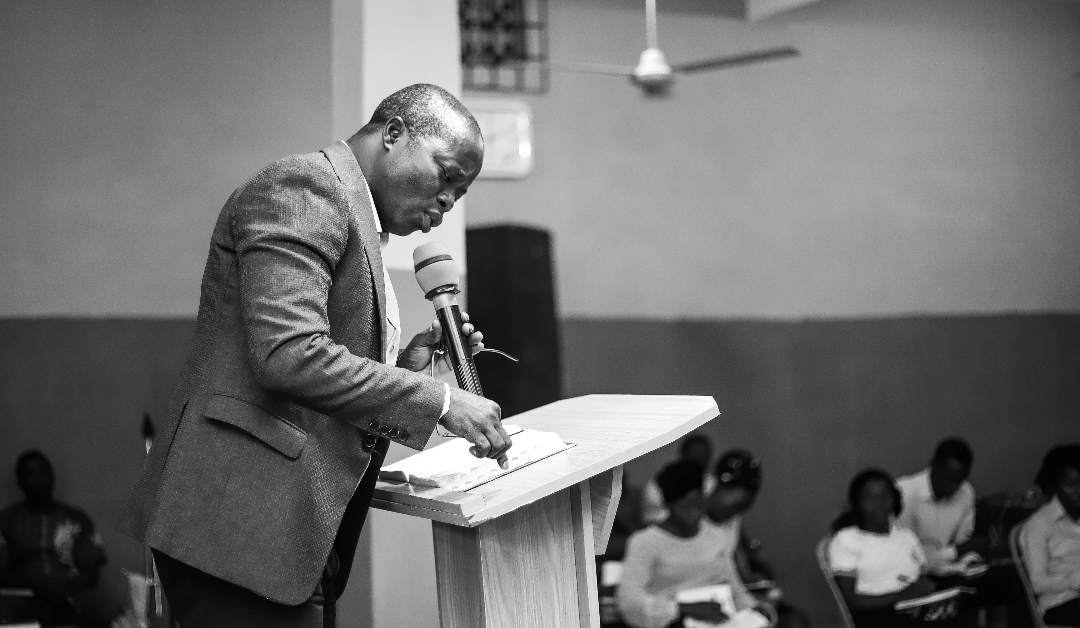
Many Christians—and especially many pastors—carry an unspoken expectation: if we are faithful to God, then God will surely bless our work in the way we hope. We often do not say it out loud, but the thought hides inside us: “If I preach faithfully, if I shepherd well, if I obey God’s Word carefully, then things in my church will definitely improve. People will repent. Unity will grow. Problems will go away.”
But what if Scripture challenges that expectation? What if God is not as predictable as we assume? And what if faithfulness does not always lead to immediate visible fruit?
This is one of the reasons I encourage every Christian—and especially every pastor—to take time at least once or twice in their life to slowly read through the historical books of the Old Testament. These books are not merely about kings, battles, and prophets. They reveal the character of God. They expose our assumptions about Him. And they force us to rethink the way we understand faithfulness and fruitfulness.
One story in particular shook me deeply: the reformation under King Josiah in 2 Kings 22–23 (ESV).
A Surprising Story in a Familiar Book
When we talk about revival, reformation, repentance, and renewal, Josiah is often celebrated as a hero. And rightly so. The Scriptures describe him as a king who:
- “did what was right in the eyes of the LORD” (2 Kings 22:2, ESV),
- turned to God “with all his heart and with all his soul and with all his might” (2 Kings 23:25, ESV),
- and led the nation in a sweeping return to the Word of God.
As pastors and church revitalizers, this is the kind of leadership we long for. This is what we pray for. We want to see people rediscover the authority of Scripture. We want to see idols torn down—whether those idols are worldly thinking, traditions that contradict Scripture, or sinful habits the church has tolerated for years. We want to see our congregations renewed in worship, obedience, and mission.
When we read Josiah’s story, it feels like the model of a successful reformation. A faithful leader. A renewed people. Clear obedience to God.
But then something unexpected happens.
Faithfulness… and Yet Exile
After all of Josiah’s reforms—after all his obedience, courage, humility, and zeal—we read something shocking:
“Still the LORD did not turn from the burning of his great wrath…”
(2 Kings 23:26, ESV)
And then, even more surprising:
“…the LORD said, ‘I will remove Judah also out of my sight…’”
(2 Kings 23:27, ESV)
Josiah’s faithfulness did not stop the exile. It did not reverse the long-term consequences of previous generations’ sin. It did not “fix” the nation.
For many Christians today, especially pastors, this can feel almost disturbing. We naturally think: If a leader like Josiah could not reverse the decline of God’s people, then what hope do we have?
But perhaps this story is not meant to discourage us—but to correct us.
Rejecting the Myth of a Controllable God
The God of the Bible—especially in the Old Testament—is not a domesticated deity. He is not a machine that gives predictable results when we press the right buttons. He is not an idol shaped by our expectations.
Sometimes we treat God like a formula:
faithfulness + hard work = desired outcome
But Scripture shows something much more complex, and much more comforting:
God is sovereign, and His purposes are bigger than our plans.
Josiah’s faithfulness mattered deeply. God honored it, remembered it, and blessed Josiah personally (see 2 Kings 22:18–20, ESV). But Josiah could not control God’s larger purposes for the nation.
And this is where the story speaks directly to pastors—especially church revitalizers.
A Message for the Weary Revitalizer
If you are trying to revitalize a struggling church, you know the weight. You know the discouragement. Sometimes you preach faithfully, pray faithfully, shepherd faithfully, yet people resist change. Old habits remain. Sin remains. Sometimes people leave. Sometimes conflict increases. Sometimes the church seems to decline even more.
In those moments, a question quietly rises in your heart:
“Lord, I am doing what is right. Why isn’t this working?”
Josiah forces us to consider something uncomfortable but freeing:
Faithfulness is not the same as control.
You may be faithful in preaching—and still see little growth.
You may be faithful in shepherding—and still watch people drift.
You may be faithful in correcting error—and still face pushback.
You may be faithful in prayer—and still see slow change.
Josiah reminds us that faithfulness is our responsibility,
but outcome is God’s responsibility.
It is possible to obey God wholeheartedly and still not see the results we desire. This is not failure. This is discipleship.
Why This Is Good News
Some pastors fall into despair: “If faithfulness doesn’t guarantee success, why try?”
But that is not the lesson of Josiah.
The lesson is this:
Faithfulness is never wasted—because God sees it, honors it, and uses it, even when we do not see the results.
Josiah did not “save” the nation, but he honored God in his generation. His obedience was real. His reforms mattered. His life pleased the Lord.
And your ministry—your preaching, your praying, your tears, your late nights, your hard conversations, your love for your people—matters too.
God may use your faithfulness to bring revival.
Or He may use it to preserve a small remnant.
Or He may use it to display His glory in hidden ways you cannot yet see.
But He will use it.
Conclusion: Faithfulness Is the Victory
The story of Josiah humbles us. It reminds us that God is not controlled by our efforts. It frees us from the burden of thinking we must “save” the church. It teaches us that results belong to the Lord.
For every pastor laboring in revitalization—take heart.
Your job is not to guarantee outcomes.
Your job is to be faithful.
And the God who stood with Josiah stands with you.