
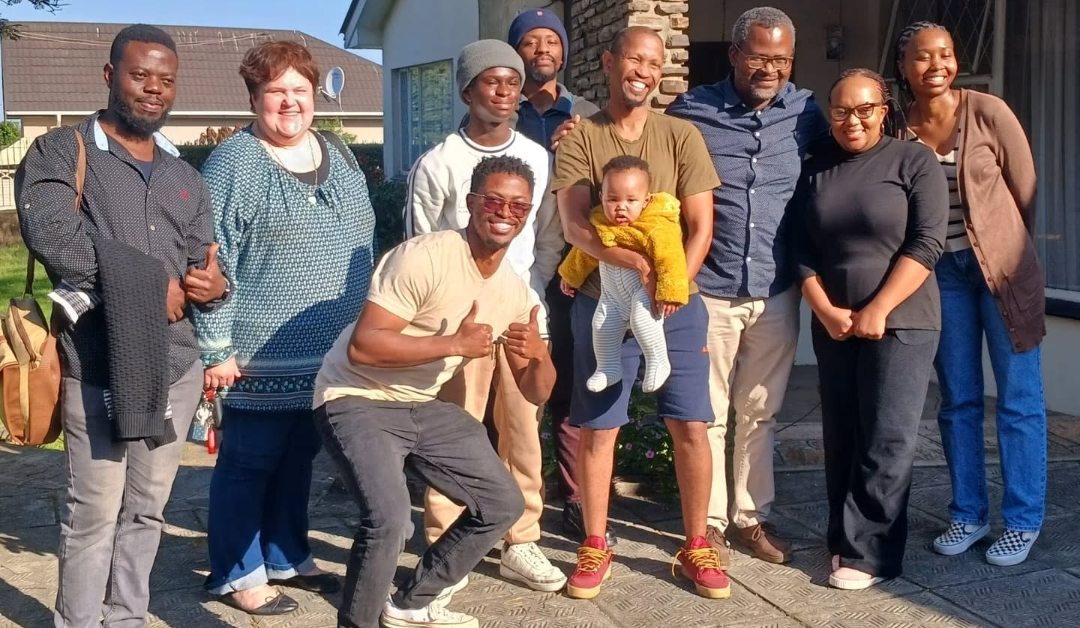
I have been thinking about the different places Naledi and I have called home over the past ten years. Some were places we thought we would live in for a long time. Others were temporary. Some remind us of wonderful memories, while others remind us of difficult seasons in our lives. And if there is one thing this year has taught me, it is that you can become attached to a place without knowing how long you will be able to call it home. We have packed and unpacked. We have adjusted to unfamiliar surroundings. We have had to make decisions about where our family might live next.
But as I look back over almost ten years of marriage, I find myself appreciating something about my wife that I did not always notice. Naledi has not merely helped make a home for our family. She has helped make our home a place where others could belong. And sometimes, the people she made room for were the very people others might never have thought to invite.
A House Is Not Necessarily a Home
When I was younger, I thought about providing a home primarily in terms of having somewhere for my family to live. A roof over our heads, enough bedrooms, furniture, and the ordinary things a family needs. Those things matter. As a husband and father, I take seriously my responsibility to provide them. But I have come to realise that a house and a home are not necessarily the same thing. You can have a beautiful house in which nobody particularly enjoys living. You can also have a modest house, with little space and furniture that does not quite match, and yet find that it is a wonderful place to be. The difference is not always the building. Sometimes it is the life that happens inside it. I have watched Naledi contribute so much to that life. She has cared about the atmosphere of our home, and the ordinary details of family life that I might otherwise overlook. But there is another aspect of her homemaking that I particularly want to honour.
There Was Always Someone We Could Invite
Naledi has always loved encouraging us to invite people over for fellowship. Sometimes it was friends, people we knew well, people whose company we enjoyed, and people with whom conversation came naturally. There is something beautiful about that kind of fellowship. But what has stayed with me most is that Naledi was often thinking about someone else. The stranger. The first-time visitor at church. The person who had only recently started attending. The person who did not seem to have many connections. And sometimes, the person to whom others might not naturally be drawn. Looking back, I think we probably had more strangers sitting around our table than close friends. I find that quite remarkable. Not because Naledi did not value our friendships. She did. But she seemed particularly concerned about people who might otherwise be overlooked.
I remember how easily a conversation about someone new at church could become a conversation about inviting them for lunch.Someone had visited the church for the first time, and Naledi would wonder whether we could have them over. Someone seemed unfamiliar with the congregation, and she would want us to get to know them. Someone might have been standing alone after the service, and she would notice. And before long, we would have people sitting around our table whom we had barely known that morning. I think there is something beautiful about that. It is relatively easy to invite the people whose company we already enjoy. There is something different about deliberately making room for someone who may have no one else inviting them. And Naledi has helped me appreciate that difference.
She Noticed the Outsiders
Churches can be friendly places without always being welcoming places. We greet visitors on Sundays. We smile. We ask how they are doing. We tell them we hope to see them again. And then we return to our friends. The people we know. The people with whom conversation is comfortable. The people who share our interests and whose company we naturally enjoy. I do not think we always do this deliberately. It is simply human nature to gravitate towards familiar people.
But sometimes that means someone attends church, sits through the service, speaks briefly to one or two people, and leaves without anyone taking a genuine interest in them. Naledi seemed particularly sensitive to that possibility. She was not merely concerned about whether someone had been greeted at church. She wanted them to experience fellowship beyond Sunday morning. A meal. A conversation. A place at our table. An opportunity to be known. And what I particularly appreciate is that she was not only interested in people who seemed likely to become our friends. There was room for the person who was different. The person who did not quite fit in. The person whose presence might make everyone else a little uncomfortable because nobody knew what to say. I have learned something from watching her. Christian hospitality is not merely entertaining the people we enjoy. Sometimes it means deliberately moving towards those whom others are inclined to overlook.
The Work Behind the Welcome
Now, I don’t want to romanticise hospitality. Inviting people into your home requires work. There is food to prepare, a house to attend to, children to manage, and usually a considerable amount of cleaning afterwards. And when you have young children, even inviting one person for lunch can require more planning than people realise. I could be excited about having people over. But Naledi was often the one thinking about what they would eat, whether there was enough food, and how everything would work. I am not sure I always appreciated that as I should have. There is a difference between saying, “We should invite someone for lunch,” and preparing the lunch. There is a difference between enjoying fellowship around the table and making sure everything is ready before people arrive. And there is a difference between appreciating a welcoming home and recognising the person who has worked to make it welcoming.
Looking back, I am grateful for the hospitality we have extended as a family. But I am especially grateful for the woman who encouraged so much of it. And I am learning that her generosity should never become an excuse for me to leave all the work to her. Hospitality is something we ought to practise together.
The Gospel and the Stranger at Our Table
There is something profoundly Christian about welcoming people who cannot necessarily offer us anything in return. In Luke 14:12–14, the Lord Jesus challenges the practice of inviting only those who can repay our hospitality. He tells his host to consider those who cannot return the favour. That is a remarkable challenge to the way we often think about opening our homes. We naturally invite people with whom we have much in common. People we enjoy. People who might invite us back. But the gospel teaches us to think differently.
After all, we were not welcomed into God’s family because we were naturally attractive or deserving of his favour. We were sinners, alienated from God, without any claim upon his mercy. Yet God, in his extraordinary grace, welcomed us through Jesus Christ. Christ gave himself for people who could never repay him. Through his death and resurrection, those who trust in him are reconciled to God and brought into his family. That is why Christian hospitality can be such a beautiful expression of the gospel. This is because welcoming others can reflect something of the undeserved welcome we ourselves have received in Christ. Paul writes: “Therefore welcome one another as Christ has welcomed you, for the glory of God.” (Romans 15:7) I think about that verse when I remember some of the people who have sat around our table over the years. People we knew well. People we barely knew. People whose backgrounds and experiences were different from ours. Some may no longer be part of our lives. Others may not even remember the meals we shared. But I hope that, for a little while, they experienced something of Christian love and belonging. And I thank God for a wife who helped me see that our table could be used for more than feeding our own family.
When the Addresses Changed
This year has reminded us that earthly homes are temporary. We have had to leave familiar places and adjust to new surroundings. That has not been easy. There are things about the homes we have lived in that we miss. There are memories attached to particular rooms, neighbourhoods, and seasons of life. And as I write this, we are still learning what the next chapter of our family life might look like. But there is something comforting about looking back. The addresses have changed. The buildings have changed. The circumstances have changed. Yet the things that made those places meaningful were never confined to their walls.
Our children grew there. We prayed there. We laughed there. Sometimes we cried there. And we welcomed people there. I think about the conversations that took place around our table. The people who joined us for meals. The fellowship we enjoyed with people who, only a few hours earlier, had been strangers. Those memories remind me that a home is not simply something you own or rent. It is also something you share. And Naledi has helped me understand that.
Something I Would Tell Young Couples
If I could speak to a young married couple, I would encourage them not to wait until they have the perfect house before opening their home to others. You do not need expensive furniture. You do not need a large dining table. You do not need to prepare a meal that will impress everyone. Sometimes a simple plate of food and a genuine interest in another person’s life are enough. But I would especially encourage young husbands to remember that hospitality involves work. Do not invite people into your home and leave your wife to carry all the responsibility. Perhaps prepare meals together. Clean together. Think together about how your home can serve others. And when you are at church, look beyond the familiar faces. Notice the person standing alone. Notice the newcomer. Notice the person who does not seem to belong to any particular group. Perhaps that person could join you for lunch. Perhaps your ordinary family table could become a place where someone experiences the kindness of Christ’s people. You may never know what such an invitation means to them.
Answer Number Six
Naledi, you have asked me many times: “Why did you choose me?” Here is my sixth answer. Because you made a home with me. Not merely because you helped make the houses we lived in comfortable. Not merely because of the meals you prepared, the rooms you arranged, or the many ordinary things you did to care for our family. But because you helped me understand that a home can be a place of welcome for people beyond our own family. I think about the people we invited for meals over the years. The friends. The newcomers. The strangers. The people who might otherwise have gone home alone. And I think about how often you were the one encouraging us to invite them. You were thinking about people I might not have noticed. You were making room for people I might not have thought to welcome. And through those ordinary acts of hospitality, you were teaching me something about the love of Christ. I know it was not always convenient. I know there were times when you were tired. I know that opening our home required sacrifices I did not always recognise. And I know that I could have done more to help carry the responsibilities that came with it. I wish I had appreciated that better at the time.
But I appreciate it now. Naledi, I still hope that one day, Lord willing, I will be able to give you a beautiful home. A place where our children can grow, where we can welcome others, and where we might eventually grow old together. But after almost ten years, I am learning that the beauty of a home is not primarily found in its size, location, or furnishings. It is found, in part, in the love that is practised within it. And I have watched you practise that love. You have helped make room not only for our children, but also for people who needed somewhere to belong, even if only for an afternoon. And sometimes, those people were strangers. I have lived in different houses with you, Naledi. But you have helped turn those houses into homes where even strangers could feel welcome. For that, my love, I thank God. That is my sixth answer.